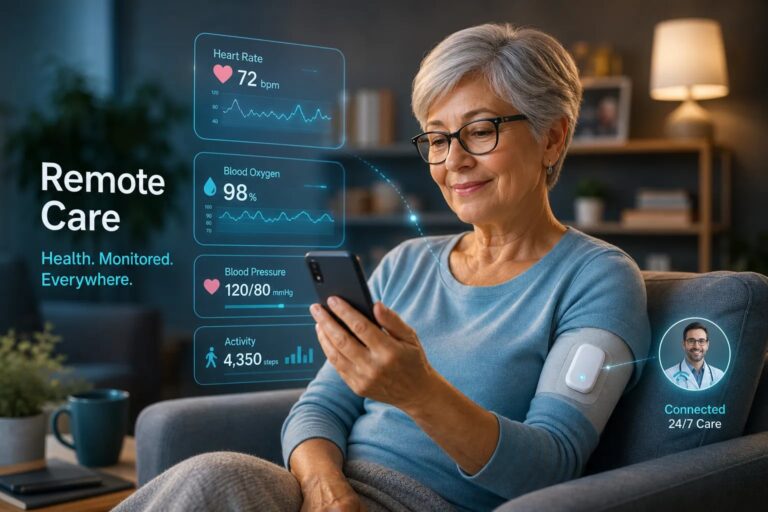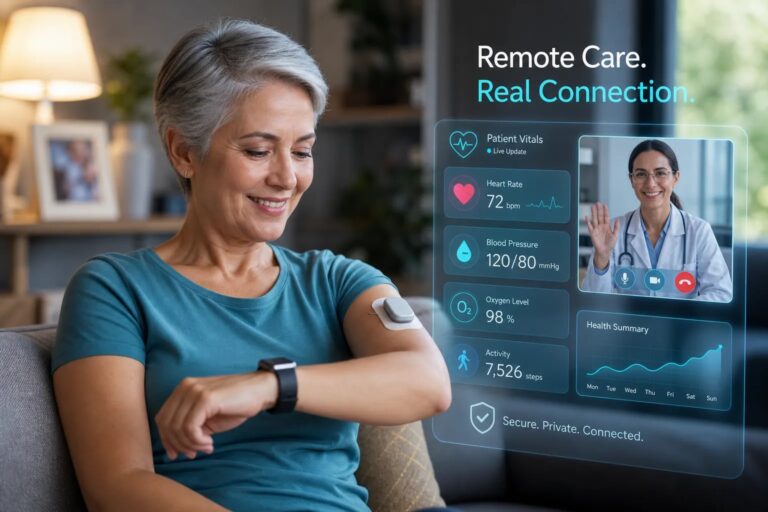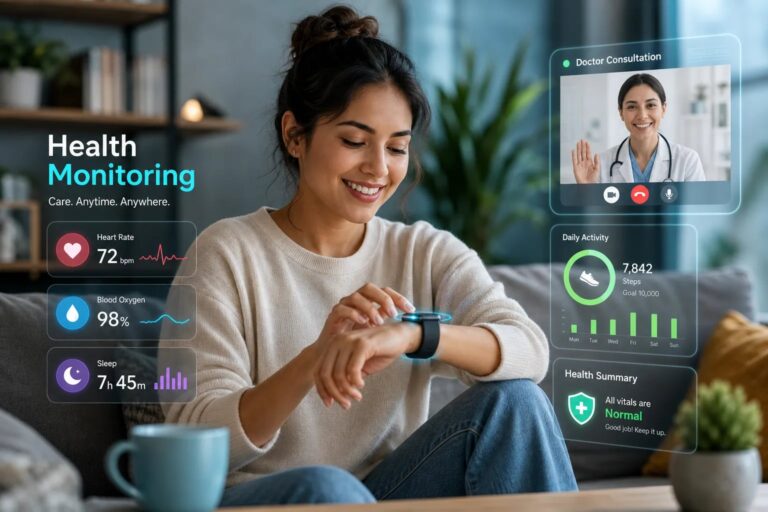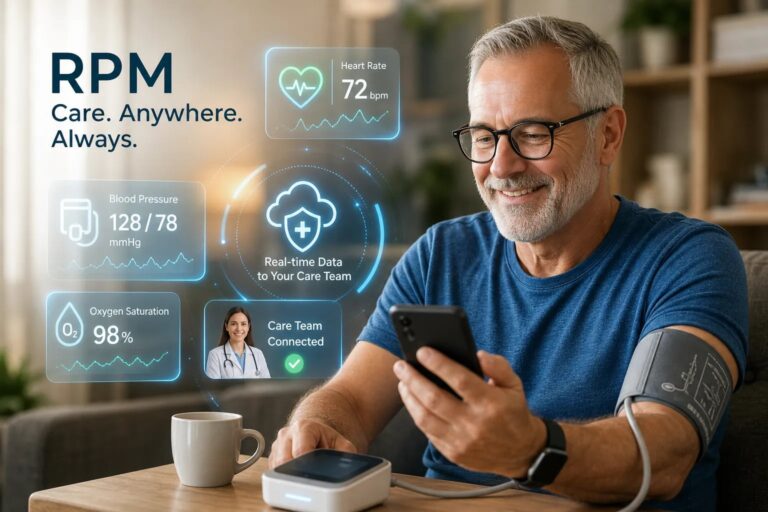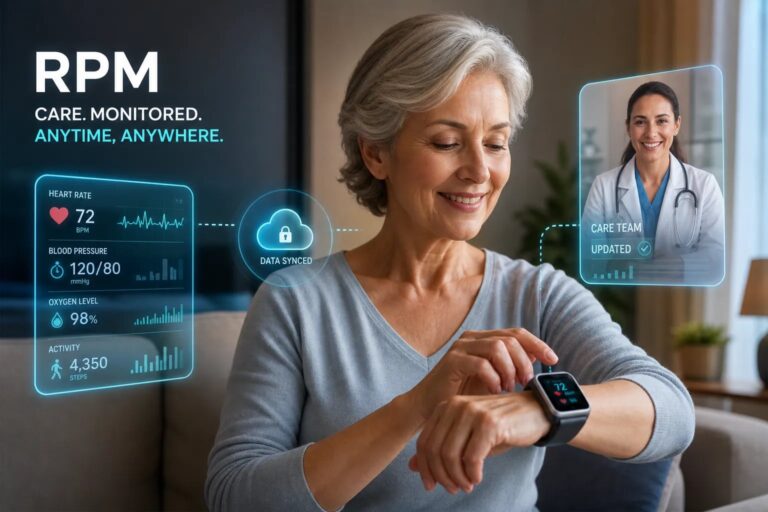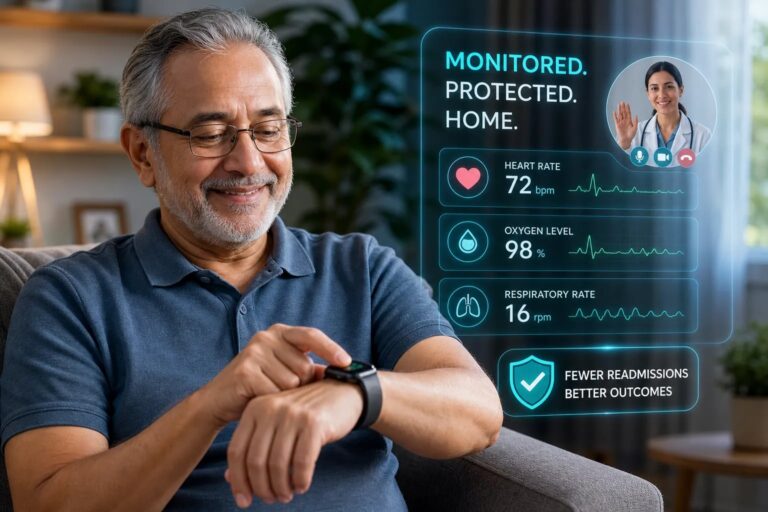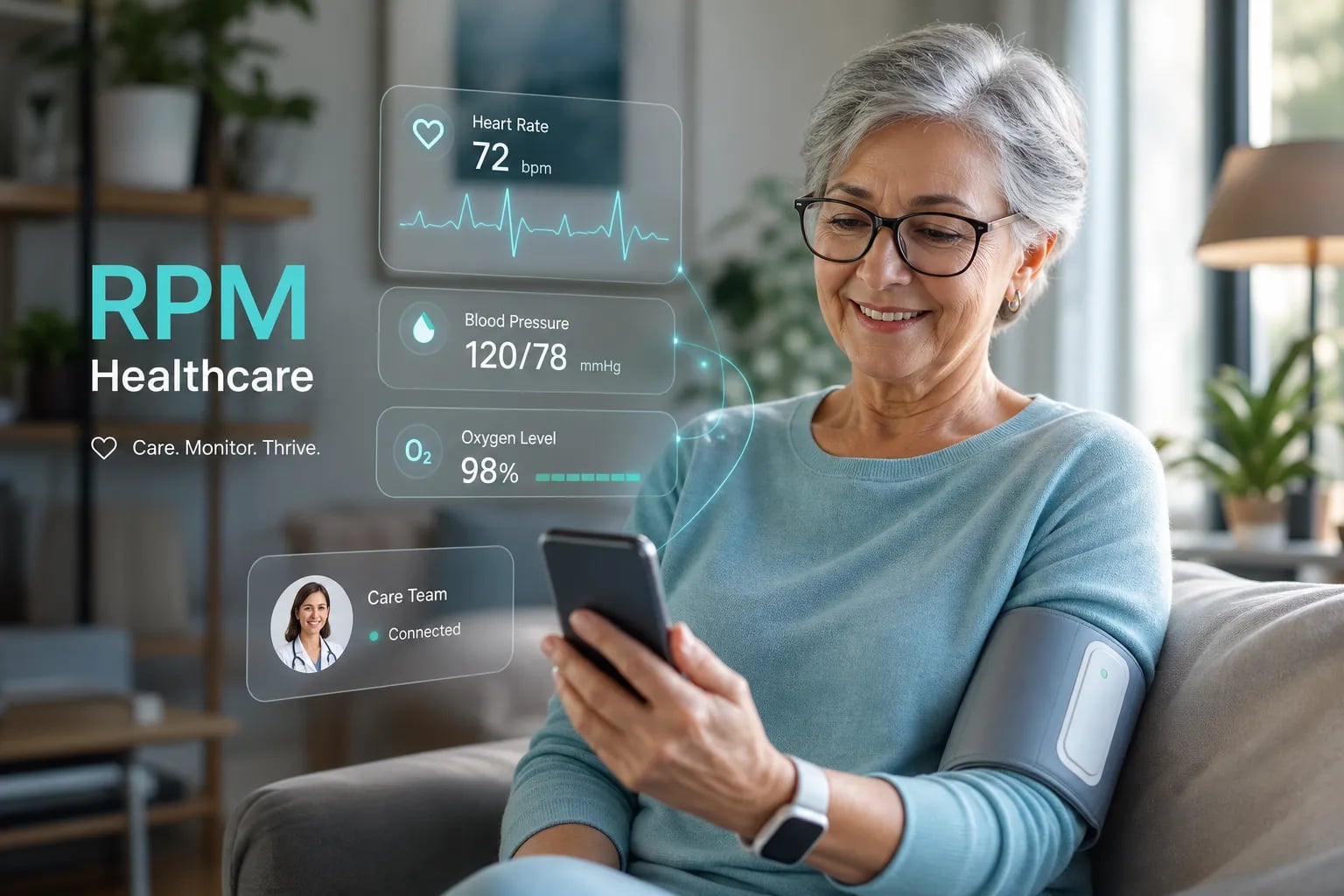
What Is RPM Healthcare and How Does It Work?
Picture this: you have high blood pressure, and your doctor sees you once every three months. But your blood pressure doesn’t stay consistent between those visits. It spikes on stressful days, drops unexpectedly, and fluctuates in ways that a single quarterly reading will never capture. That gap between appointments is exactly where RPM healthcare steps in. Remote patient monitoring programs give licensed clinicians continuous visibility into a patient’s health data at home, closing the oversight gap that traditional care schedules leave open.
Remote patient monitoring (RPM) is a structured clinical model where licensed clinicians track a patient’s vital signs and health data continuously from home using connected medical devices. This isn’t passive self-tracking with a consumer wellness app. It’s a supervised care service with real clinicians, real devices, and real response protocols built around the patient’s specific condition. Platforms like RemoteHCS are purpose-built to deliver this kind of connected care to patients managing chronic illness at home.
For anyone managing a chronic illness, what happens between appointments matters just as much as what happens during them. This article covers how the RPM model works from enrollment to care response, who it’s designed for, which conditions it tracks most effectively, and how to evaluate whether a remote monitoring program is the right fit for you or someone in your care.
What “RPM healthcare” actually means
The Centers for Medicare and Medicaid Services defines remote patient monitoring as the collection and analysis of patient physiological data using connected technology, reviewed by a clinician outside a traditional clinical setting. That definition is precise for a reason. RPM is not a device category. It is not an app. It is a structured clinical service that includes patient enrollment, device provisioning, ongoing data review, and a defined protocol for care team response.
The distinction matters because consumers encounter a lot of technology marketed as health monitoring. Fitness trackers, smartwatches, and wellness apps all collect health-related data. None of them constitute RPM. A legitimate remote patient monitoring program involves a licensed clinician, documented monitoring time, a clinical care plan, and an obligation to act when the data signals a problem. The technology is the vehicle. The clinical structure is what makes it healthcare.
How RPM differs from general telehealth
Telehealth is a broad umbrella. It covers on-demand video visits, asynchronous messaging with a provider, digital prescription services, and virtual urgent care. Remote patient monitoring sits within that umbrella, but it operates differently from any of those services. A telehealth video call is reactive: something prompts the patient to schedule it, and a clinician responds. RPM is proactive: data flows from the patient’s home to the care team every day, whether or not the patient feels the need to initiate contact.
That distinction changes what’s possible clinically. A clinician responding to a video visit knows only what the patient reports in that moment. A clinician with 30 days of daily blood pressure readings has a far more accurate picture of what’s actually happening with that patient’s cardiovascular health. RPM doesn’t replace telehealth visits. It makes them more informed and more effective when they do happen.
Why the “remote” part changes everything for chronic care
The core value of remote monitoring is asynchronous oversight. Clinicians receive data without the patient needing to travel to a clinic, schedule a visit, or even make a phone call. For a patient in a rural county with limited clinic access, that is not a convenience. It is the difference between having a clinical team monitoring their condition daily and having no clinical oversight at all between quarterly appointments.
For patients whose conditions make travel physically difficult, those managing severe COPD, heart failure, or post-surgical recovery, the same logic applies. The “remote” component removes the logistical friction that often causes high-risk patients to fall through the gaps in traditional care models.
The difference between monitoring and managing
Collecting data and acting on it are two different things, a genuine RPM program doesn’t just accumulate readings on a dashboard. It includes clinical interpretation, threshold-based alerting, care team response protocols, and documentation of all monitoring activity. When a patient’s blood pressure spikes to a dangerous level, a well-designed RPM program triggers a clinical response often the same day or within hours, depending on program staffing and alert workflows, not at the next scheduled appointment. That response capability is what separates meaningful remote care management from passive data collection.
How remote patient monitoring works from enrollment to care response
The operational flow of an RPM program has four clear stages: enrollment and consent, device setup, continuous data transmission, and care team response. From the patient’s perspective, the daily experience is simple: take your reading each day, and your care team receives it automatically. The clinical complexity happens behind the scenes, managed by the program’s care coordinators and monitoring clinicians.
Getting enrolled and set up with a device
Enrollment typically begins when a provider identifies a patient who would benefit from ongoing remote monitoring. The patient receives an explanation of how the program works, what data will be collected, who will see it, and how to reach the care team with questions. After consent is documented, the appropriate device is provisioned and shipped to the patient’s home. The onboarding process includes activation, baseline readings, and a brief orientation so the patient understands exactly what to do and who to contact if something doesn’t work as expected.
Most RPM programs also assign a care coordinator during onboarding. This person serves as the patient’s primary contact from the start, walks them through the device, answers initial questions, and confirms that data is flowing correctly to the clinical team. This human touchpoint in the early stages makes a meaningful difference in whether patients stay engaged with the program.
How health data travels securely from home to your care team
Once a reading is taken, the data moves from the device to a secure, cloud-based monitoring platform using cellular or Bluetooth transmission. Many modern RPM devices use cellular connectivity, meaning they often don’t require the patient to have home Wi-Fi or pair the device with a smartphone. The patient takes the reading, and the data transmits automatically. On the platform side, the transmission is encrypted end-to-end, stored in a HIPAA-compliant system, and made visible to the clinical team through a monitoring dashboard.
HIPAA’s Security Rule requires that all electronic protected health information transmitted from a home device be protected in transit and at rest. For RPM platforms operating correctly, this means TLS-encrypted transmission from device to cloud and access-controlled storage at every point where the data rests. The data generated at home is just as sensitive as data produced in a clinic. A legitimate RPM platform handles it accordingly.
What triggers a clinical alert and what happens next
Every patient in an RPM program has individualized threshold settings based on their condition and baseline readings. If a blood pressure reading comes in above the defined ceiling, or a pulse oximeter reading drops below a safe minimum, the system flags it immediately as an alert. A care coordinator or clinician reviews the alert and contacts the patient directly, often the same day, to assess the situation and determine whether any intervention is needed. This alert-and-response mechanism is the safety net that gives RPM its clinical value for high-risk patients.
The response is not always an emergency. Sometimes the follow-up call reveals that the patient’s device was positioned incorrectly, or that a stressful event explained a temporary spike. The value is not in treating every alert as a crisis. It’s in the consistency: no dangerous reading goes unreviewed, and no patient goes weeks without someone checking in on what their data shows.
Who RPM healthcare is built for
Remote patient monitoring is not the right fit for every patient. But for certain populations, it’s not a supplemental feature, it’s a clinical necessity. The people who benefit most from RPM are often the same people for whom frequent office visits are hardest to manage, whether because of physical limitations, geography, or the complexity of conditions that require daily attention.
Medicare-eligible seniors managing one or more chronic conditions
Adults 65 and older with ongoing conditions like diabetes, hypertension, or heart failure represent the primary population RPM is designed to serve. Many are on fixed incomes, prefer care that comes to them, and live with conditions that require the kind of daily oversight a quarterly office visit simply cannot provide. Medicare has covered RPM services since 2018, per CMS policy, which removes the financial barrier that might otherwise make this level of monitoring inaccessible to this group.
Patients juggling multiple conditions at once
When a patient is managing both kidney disease and hypertension, or both diabetes and heart failure, the clinical stakes of a missed reading rise sharply. These conditions don’t develop in isolation. A fluid retention event in a heart failure patient can also signal a kidney function change. RPM gives a care team continuous visibility into how multiple conditions interact in real time, rather than relying on a snapshot taken months apart. For patients with multiple chronic conditions, early detection of one condition’s change often prevents a cascade across the others.
Rural and mobility-limited patients who can’t get to a clinic easily
For Americans living in medically underserved areas, the nearest specialist may be an hour or more away. For patients whose COPD makes a long drive physically exhausting, or whose weight or disability makes repeated clinic visits impractical, RPM isn’t a convenience. It’s their most reliable path to consistent clinical oversight. The monitoring happens at home, on the patient’s schedule, with no transportation required.
The chronic conditions RPM tracks most effectively
Remote monitoring solutions deliver their strongest clinical value where daily data is essential to meaningful care management. The conditions below are not the only ones compatible with RPM healthcare, but they represent the clearest cases where continuous home monitoring closes a genuine gap in traditional care delivery.
Hypertension and diabetes: the most common RPM use cases
Blood pressure and blood glucose are the two most frequently monitored metrics in RPM programs, and for good reason. Both conditions require daily tracking to catch dangerous fluctuations before they escalate to a crisis. A single office visit reading for a hypertensive patient can look perfectly controlled while daily readings at home tell a different story entirely. A blood pressure cuff or glucometer connected to an RPM platform gives the care team a continuous, accurate picture that no quarterly appointment can replicate.
The goal isn’t just to collect data, it’s to catch the trend before it becomes an emergency. When a diabetic patient’s blood glucose starts climbing steadily over two weeks, a monitoring clinician can intervene with a medication adjustment long before that patient lands in the emergency room with a dangerous hyperglycemic episode.
Heart failure, COPD, and kidney disease
For heart failure patients, daily weight monitoring is one of the most reliable early warning indicators available. A sudden weight gain of two to three pounds in 24 hours often signals fluid retention, which can predict a decompensation event days before it becomes a hospitalization. Clinical evidence supports this approach: a 2023 meta-analysis published in the Journal of Cardiac Failure reported roughly a 20 to 22 percent relative reduction in first heart failure-related hospitalization events among patients enrolled in structured remote monitoring programs, though results varied across individual trials.
For COPD patients, pulse oximetry readings at home flag dangerous drops in oxygen saturation early, giving clinicians the opportunity to adjust treatment or escalate care before the patient reaches a critical threshold. For those with chronic kidney disease, tracking relevant metrics over time gives clinicians a more accurate view of disease progression than periodic lab draws alone, particularly in identifying patterns that signal accelerating decline.
Post-surgical recovery and short-term monitoring needs
RPM isn’t exclusively for lifelong chronic conditions. Patients discharged after a hospital stay or surgical procedure face their highest complication risk during the days and weeks immediately following discharge, often before their first follow-up appointment is scheduled. Short-term RPM monitoring during this window gives the care team a safety net that can catch early warning signs of infection, cardiovascular strain, or other post-operative complications before they require readmission.
The connected devices patients use every day
The technology involved in home-based monitoring is far less intimidating than most patients expect. The devices are familiar, purpose-built for home use, and chosen specifically to match the patient’s condition. No technical background is required, and many devices don’t require a smartphone or a home Wi-Fi network to function.
The most common RPM devices and what they measure
A standard RPM setup might include any of the following, depending on the patient’s condition:
- Blood pressure cuff: measures systolic and diastolic blood pressure, often also captures pulse rate
- Glucometer: measures blood glucose levels for diabetes management
- Pulse oximeter: measures oxygen saturation (SpO2) and heart rate, critical for COPD and heart failure patients
- Connected weight scale: tracks daily body weight to detect fluid retention in heart failure patients
- Spirometer: measures lung function and peak expiratory flow, used in respiratory monitoring programs
Blood pressure monitoring represents the highest-volume device category in RPM programs nationwide, based on industry deployment data. Each device is designed for ease of use, requires minimal setup, and transmits data automatically after a reading. The patient’s only job is to take the reading consistently.
How devices connect without technical know-how
Many modern RPM devices include built-in cellular connectivity, which eliminates the technical barrier that concerns patients when they first hear about home monitoring. The patient takes a reading, and the data transmits directly to the care team’s monitoring platform. The transmission, encryption, and clinical review all happen automatically and invisibly on the back end, no Wi-Fi setup or smartphone pairing required for cellular-enabled devices.
Why HIPAA-level protection matters for home health data
Health data generated at home carries the same legal and ethical protection requirements as data generated inside a clinic. Under HIPAA, any electronic health information collected, transmitted, or stored by a covered entity or its business associates qualifies as protected health information. This means the device, the transmission network, the cloud platform, and the clinical dashboard must all operate under appropriate security controls, including encrypted storage, access controls, and signed business associate agreements with any vendor that handles the data.
A legitimate RPM platform makes these protections explicit. Patients should never have to guess whether their readings are secure. The answer from any credible program should be straightforward: all data is encrypted in transmission and at rest, stored in HIPAA-compliant systems, and never shared without the patient’s explicit permission.
How your care team uses RPM data between visits
The most common question from patients new to remote monitoring is a practical one: what does my doctor actually do with all this data? The answer reveals the clinical depth that separates structured RPM from passive self-monitoring. Care teams aren’t watching a dashboard passively and waiting for something to go wrong. They have defined workflows, response protocols, and structured communication tools built around the incoming data.
Daily monitoring and what clinicians are watching for
Licensed clinicians and care coordinators review incoming readings on a regular schedule, assessing whether each patient’s data falls within their established thresholds. The goal is not to react to every individual number in isolation, it’s to identify meaningful trends early, before a developing problem becomes an acute event. A blood pressure reading that’s slightly elevated once is noteworthy. A blood pressure reading that’s been trending upward for nine consecutive days is a clinical signal that warrants direct contact and possible medication adjustment.
Secure messaging and virtual check-ins as part of the care model
Beyond alert-driven contact, most RPM programs include structured communication as a standard part of the model. Secure messaging, scheduled phone check-ins, and virtual consultations give patients a consistent channel to ask questions, report symptoms, and discuss concerns without waiting for a scheduled appointment. This ongoing contact keeps patients engaged in their care and gives clinicians the qualitative context that raw data alone doesn’t provide. A patient who mentions they’ve been more sedentary this week, or that they forgot to take their medication twice, gives the clinical team information that changes how they interpret that week’s readings.
The care coordinator’s role in day-to-day RPM support
Many RPM programs assign a dedicated care coordinator as the patient’s primary point of contact throughout the program. This person handles device questions, explains what readings mean in plain language, follows up after alerts, and communicates with the treating physician when data warrants it. For patients who are new to digital health RPM tools, or who feel uncertain about interpreting their own numbers, this human support layer is what makes the program sustainable over the long term. Data-driven care doesn’t have to feel impersonal. A consistent care coordinator relationship ensures it doesn’t.
What Medicare covers for remote patient monitoring
For the Medicare-eligible population that RPM is primarily designed to serve, coverage is one of the first practical questions on the table. The answer is reassuring: Medicare has covered remote patient monitoring services since 2018 through CMS-established billing codes. Many Medicare Part B beneficiaries managing a chronic condition will meet the baseline eligibility criteria for coverage, depending on clinical need and the use of a qualifying connected device.
RPM billing and reimbursement: the CPT codes behind Medicare-covered services
CMS established four specific billing codes that define reimbursable RPM services. Understanding them helps patients and caregivers know exactly what they’re entitled to under Medicare:
- 99453: Covers initial device setup and patient education. Medicare reimburses approximately $21.71 nationally for 2026.
- 99454: Covers the device supply and ongoing data transmission for a 30-day period. The 2026 national average reimbursement is approximately $52.11.
- 99457: Covers the first 20 minutes of monthly RPM treatment management, which must include at least one live, interactive contact with the patient or caregiver. Reimbursement is approximately $51.77.
- 99458: An add-on code covering each additional 20-minute increment of monthly management time, reimbursed at approximately $41.42.
These codes represent a meaningful reimbursement structure that allows clinical programs to sustain high-quality monitoring without passing the cost entirely to patients. For a patient receiving a full month of RPM services, the combined reimbursement across these codes can exceed $160 per month under Medicare.
Who qualifies for Medicare-covered RPM
To qualify for Medicare-covered RPM, a patient generally needs a physician order for monitoring services, a diagnosed acute or chronic condition that requires ongoing clinical oversight, a qualifying connected device that transmits data electronically, and documented consent to participate in the program. Many Medicare Part B beneficiaries managing conditions like hypertension, diabetes, heart failure, COPD, or chronic kidney disease will meet these criteria, though individual eligibility depends on clinical need and the specific devices used in the program.
Common billing questions patients and caregivers ask
The most frequent concern from patients considering RPM is whether they’ll face unexpected out-of-pocket costs. Under Medicare Part B, RPM services are subject to the same cost-sharing structure as other covered outpatient services, typically 20 percent after the deductible, with Medicare covering the remaining 80 percent. Patients with Medigap or supplemental coverage may have little to no out-of-pocket exposure at all. RPM does not replace office visits. It complements them. Patients continue to see their physician on their regular schedule, with the benefit that their doctor now has a far richer picture of what’s been happening between appointments.
Choosing a purpose-built RPM healthcare platform
Once you understand how remote patient monitoring works and what it’s designed to do, the next question is practical: how do you find a program that actually delivers on that model? Not all remote monitoring solutions are built the same way. Some general telehealth services have added monitoring features as an afterthought. Others, like RemoteHCS, are built from the ground up around continuous, condition-specific monitoring as their core function.
What separates a purpose-built RPM platform from a general telehealth tool
A general telehealth platform is designed primarily for on-demand visits: you schedule a video call, see a provider, and get a prescription or a referral. Monitoring is not the point. A purpose-built RPM healthcare platform is structured entirely differently. It’s built around continuous data flow, condition-specific device selection, threshold-based alerting, care coordinator workflows, HIPAA-encrypted transmission, and Medicare-aligned billing. These are not the same product wearing different labels. For a patient with a chronic condition who needs daily oversight, only one of these options actually provides it.
The questions worth asking before you enroll
Before committing to any remote monitoring program, patients and caregivers should ask these questions directly:
- Is this program HIPAA-compliant, and can they explain specifically how data is protected?
- Are the clinicians monitoring my data licensed in my state?
- Which conditions and connected devices does the program support?
- How quickly are alerts reviewed and acted on?
- Is Medicare coverage confirmed for my specific enrollment?
The answers reveal whether a platform is genuinely built for long-term chronic care or simply offers monitoring as a secondary feature.
Why RemoteHCS is designed specifically for this
RemoteHCS is built around exactly the use case this article describes: ongoing, condition-specific monitoring for patients managing chronic illness at home. The platform supports monitoring for diabetes, hypertension, heart failure, COPD, kidney disease, and post-surgical recovery using connected devices including blood pressure cuffs, glucometers, pulse oximeters, and weight scales. It operates within Medicare’s RPM reimbursement framework using the established CPT codes and handles all data through HIPAA-encrypted systems.
RemoteHCS is not a general telehealth platform that added a monitoring module. Monitoring is the entire model. That distinction matters for patients who need a clinical team paying daily attention to their health data, not one that checks in only when a visit is scheduled. RemoteHCS enrolls patients with a care model built specifically for the chronic conditions that require this level of continuous oversight.
Is RPM healthcare right for you?
Strip remote patient monitoring down to its purpose and the concept isn’t complicated: licensed clinicians monitor your health data at home, every day, between appointments, so that changes in your condition get caught early. For patients managing hypertension, diabetes, heart failure, COPD, kidney disease, or recovering from surgery, that continuous oversight is what prevents a manageable health change from becoming a hospitalization.
What makes the difference is the clinical structure behind the technology. Threshold-based alerts only matter if someone reviews and acts on them. Data is only valuable if a qualified clinician interprets it in the context of your specific condition and care plan. RemoteHCS delivers that clinical structure in a Medicare-compatible, HIPAA-compliant format, designed specifically for patients who need more than a monitoring module bolted onto a general telehealth tool.
If you or someone in your care is evaluating rpm healthcare options, start by identifying a provider with the infrastructure, licensed clinical team, and condition-specific device support to do it properly. The gap between your appointments doesn’t have to be a blind spot. With the right RPM healthcare program in place, your care team stays informed every single day.