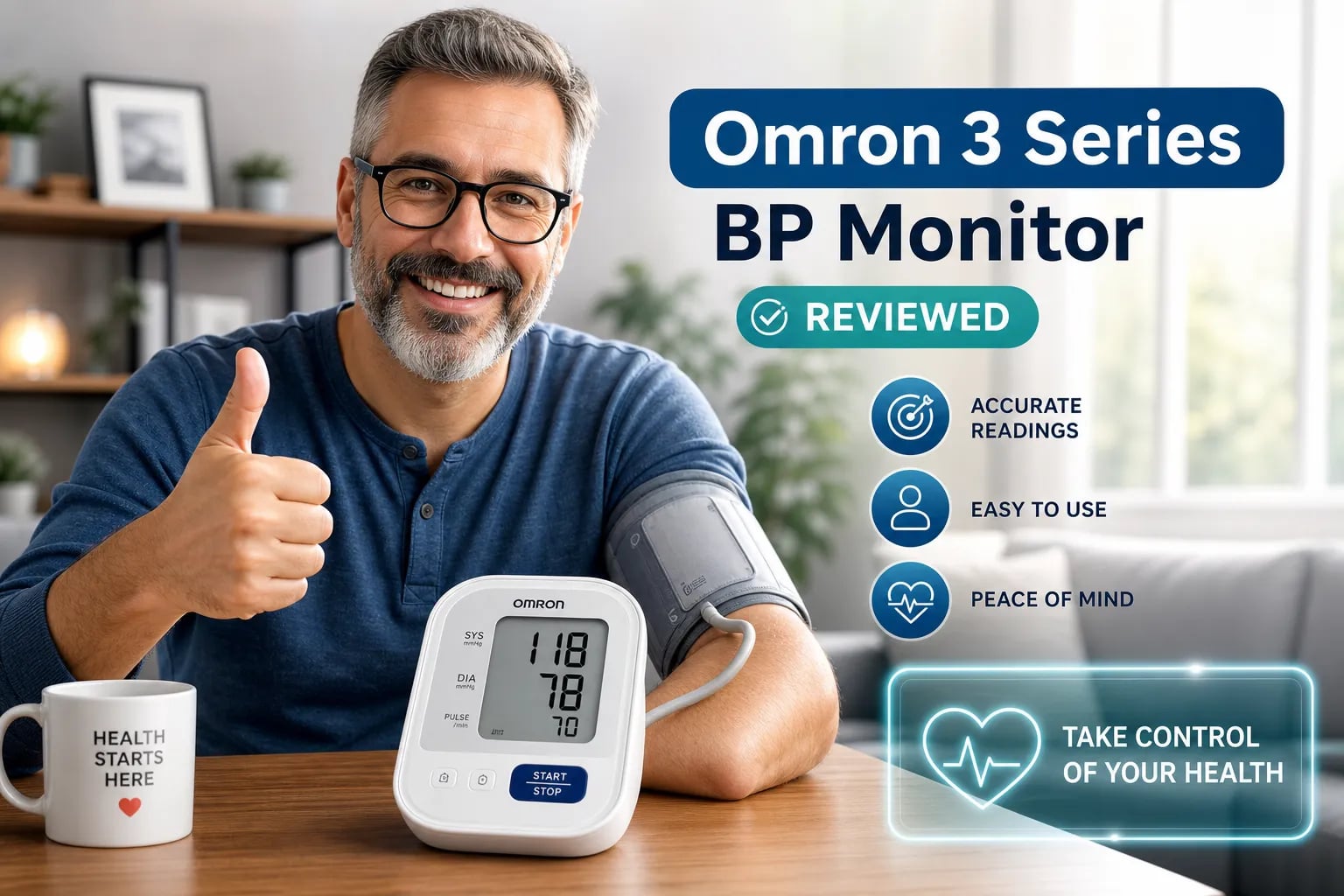
Omron 3 Series BP Monitor Review: Is It Right for You?
The Omron 3 Series BP monitor is one of the most frequently purchased entry-level blood pressure monitors on the market, and for good reason: it’s affordable, widely available at major retailers, and Omron carries decades of clinical credibility behind its name. Most people buy it, take a few readings, and then stare at the numbers with no real sense of whether those numbers are accurate or what to do next. But “3 Series” isn’t a single device. It’s a small product family, and choosing the wrong model for your situation creates accuracy problems you won’t notice until a clinician points them out.
This article breaks down the two core 3 Series models, where their differences actually matter, how to set up either one for reliable readings, and who should consider stepping beyond a standalone monitor entirely. For patients already enrolled in a remote monitoring program, note that services like RemoteHCS supply clinically validated connected monitors directly, taking the device-shopping decision off the table completely.
1. What the Omron 3 Series lineup actually includes
The two core models and what they cover
The Omron 3 Series consists of two primary devices: the BP7150 (upper arm) and the BP6100 (wrist). The BP7150 carries the reference number HEM-7142T2-Z, while the BP6100 is listed as HEM-6180-Z. This matters because Omron’s clinical validation documentation is organized by reference number, not just the series name, so knowing the exact model you own determines what accuracy claims apply to your specific unit.
The confusion shoppers run into is understandable. “3 Series” functions as a product tier, not a specific SKU, so a search for the monitor can surface either model depending on the retailer. Both devices share the same branding but serve different use cases, which is why reading the spec sheet before buying saves real headaches later.
Where the 3 Series fits in Omron’s broader lineup
Within Omron’s home monitoring lineup, the 3 Series sits at the entry level, below the 5 Series and 7 Series. That positioning reflects what you get and what you give up. The trade-offs include fewer memory slots, no multi-user support on the upper arm model, and no atrial fibrillation detection features that appear in higher tiers. The 3 Series is designed for basic daily monitoring, not clinical-grade data management or advanced rhythm detection.
For someone who simply needs to track blood pressure at home and bring a log to quarterly appointments, this tier handles the job. But patients with more complex conditions, or physicians who want daily trend visibility, will find the 3 Series limiting within a few months of use.
Who this monitor is built for
The ideal 3 Series buyer is someone newly diagnosed with hypertension, a caregiver monitoring an elderly family member at home, or a patient whose doctor asked them to track readings between appointments without providing a specific device recommendation. The price point makes it accessible, and the Omron name provides a reasonable baseline of clinical confidence. That said, patients enrolled in telehealth or remote monitoring programs should know that program-supplied devices are typically pre-configured for clinical data transmission, which is a different standard than what the 3 Series covers on its own.
2. Upper arm vs. wrist: which Omron 3 Series BP monitor fits your situation
Why upper arm monitors are the clinical standard
The BP7150 follows American Heart Association and clinical guidelines by measuring at the brachial artery on the upper arm, which is considered more reliable than wrist measurement for most adult patients. The device uses a D-ring cuff, a one-piece design that wraps around the arm without requiring you to thread the cuff through a metal ring. This makes consistent placement significantly easier, especially for older patients or those with limited hand dexterity. Upper arm positioning is also less sensitive to small body movements and arm angle variations during a reading, which reduces user error in practice.
The case for the wrist monitor and its real limitations
The BP6100 is compact and travel-friendly, and those qualities appeal to active users who want to monitor on the go. The practical problem is that wrist monitors require the wrist to be held at exact heart level during measurement. Any deviation from that position, even a few inches, skews the reading in ways that can be clinically significant. The BP6100 also lacks Heart Zone Guidance, which is the feature in some wrist models that tells you whether your wrist is positioned correctly before the reading is taken. Without that feedback mechanism, user error becomes more likely, not less.
Clinical studies back this up directly. In comparative research, wrist readings ran approximately 5.6% higher for systolic and 5.4% higher for diastolic pressure compared to upper arm measurements, with greater variability overall. That level of inconsistency can lead to misclassification of blood pressure control status, which has real consequences for medication decisions.
Which model to choose based on your health situation
The BP7150 is the right pick for anyone managing hypertension long-term, sharing readings with a physician, or monitoring at home on a daily basis. Its upper arm placement and Bluetooth connectivity make it the clinically sounder choice across virtually every routine scenario. Reserve the BP6100 for occasional spot-checks or as a travel backup, not as a primary monitoring device. For patients whose physician is actively reviewing their numbers between appointments, upper arm is the right call every time.
3. Clinical accuracy and what “validated” really means for home monitors
Understanding AAMI and ISO accuracy standards
When a monitor is described as “clinically validated,” it means the device was tested in a controlled setting against a reference standard mercury or aneroid sphygmomanometer. The key benchmark Omron cites is accuracy within ±3 mmHg or 2% for blood pressure and ±5% for pulse, which aligns with the Association for the Advancement of Medical Instrumentation (AAMI) standards. International frameworks used for this validation include ESH-IP (European Society of Hypertension International Protocol) and ISO 81060-2, the current global standard for non-invasive blood pressure measurement devices.
How Omron validates the 3 Series and why model-specific detail matters
Clinical validation in Omron’s lineup is model-specific. The BP7150 (HEM-7142T2-Z) is validated under ISO 81060-2:2013 and ISO 81060-2:2018+A1:2020, and is marked as ESH-IP validated in Omron’s clinical validation table. It is not listed as AAMI-validated or BHS-validated, which is worth noting if your physician references those specific standards. Omron also lists the BP7150 as meeting U.S. Validated Device Listing (VDL) criteria for clinical accuracy on its product page.
There is a meaningful caveat here. Medaval, a third-party clinical validation resource, has noted that some validation entries for certain products in this family lack peer-reviewed independent confirmation. That uncertainty with Omron’s own claims means you should verify your exact model’s reference number against Omron’s validation table before assuming any particular certification applies to your unit. The reference number on the product label is the right place to start.
What accuracy means in practice for daily readings
A ±3 mmHg tolerance is clinically acceptable for home monitoring, but it assumes you’re using the device correctly. That tolerance exists in a controlled validation environment. In the real world, technique matters as much as the device itself. A clinically validated monitor worn on a bent arm with a cuff placed over a sleeve produces numbers that no accuracy standard can save. The next two sections address exactly how to avoid those errors.
4. Cuff sizing: the detail most buyers overlook
Upper arm cuff range and what it covers
The BP7150 ships with a D-ring cuff that covers 9 to 17 inches of arm circumference, which translates to approximately 22 to 42 centimeters. That range accommodates most adult arms, but not all. Anyone outside that range needs a different cuff size, and Omron sells those separately. Using the wrong cuff size is one of the most common reasons home blood pressure readings appear falsely high or falsely low, and it’s a problem that’s entirely avoidable with a two-minute self-measurement before purchasing.
Wrist sizing for the BP6100 and its sensitivity
The BP6100’s wrist cuff covers 5.3 to 8.5 inches of wrist circumference. Even within that range, wrist monitors are far more sensitive to soft tissue and tendon positioning than upper arm monitors, which means two people with identically sized wrists can get meaningfully different results based on how their anatomy interacts with the cuff during inflation. Patients with larger wrists, or those with known circulation issues in the wrist (a recognized complication in long-term diabetes), should default to upper arm monitoring rather than working around the limitations of a wrist device.
How to measure your arm correctly before buying
Self-measurement takes less than a minute. Wrap a soft measuring tape around your upper arm at the midpoint between your shoulder and elbow, then note the circumference in inches or centimeters. Compare that number against the cuff specification for the model you’re considering. If you’re close to the upper end of the stated range, consider sizing up or looking at a model that ships with a larger cuff. Getting the cuff right is not a cosmetic concern; it is a clinical one that directly affects whether your readings can be trusted.
5. Bluetooth, app connectivity, and tracking readings over time
How the Omron Connect app works with the BP7150
The BP7150 is Bluetooth-enabled and syncs with the Omron Connect app on iOS and Android. After pairing, readings transfer automatically from the device to the app, where they’re stored, displayed as trend graphs, and organized by date. The app generates shareable reports that can be emailed directly to a physician or care coordinator, which makes it useful for patients whose doctors want to review readings between appointments. It also integrates with Apple Health, Google Fit, and Samsung Health when those connections are enabled.
The device itself stores 14 readings in onboard memory before needing to sync. For a patient monitoring twice daily, that’s a seven-day buffer, which is workable but not generous. Syncing regularly is the right habit, both to preserve data and to keep the trend view in the app current.
What you lose with the BP6100’s lack of Bluetooth
The BP6100 does not have Bluetooth and is not listed as Omron Connect-compatible in Omron’s own product comparison chart. The device stores 60 readings in internal memory, which is more than the BP7150, but none of that data syncs automatically to any app or platform. The practical consequence is that patients have to manually transcribe readings from the device display or bring the physical monitor to appointments for the physician to scroll through. For consistent, long-term tracking, that’s a meaningful barrier. More readings stored is only an advantage if those readings are accessible to the people who need to act on them.
Who benefits most from connected monitoring features
The ideal Bluetooth monitor user is a patient whose physician has asked them to log and share daily readings, or someone using a telehealth platform where data visibility between visits matters. For patients enrolled in remote monitoring programs, the app connectivity question is already answered. Enrolled devices in programs like RemoteHCS are pre-configured for clinical data transmission, so readings flow directly to a licensed care team without requiring the patient to manage app syncing, report generation, or manual logging. That’s a structurally different model than using a consumer app, and it’s worth understanding the distinction.
6. Price, warranty, and where to buy
What to expect at retail and where prices land
The Omron 3 Series models generally fall between $38 and $65 depending on retailer, model, and whether any promotional pricing is active. The BP7150 is currently listed at $34.97 to $38.47 at Walmart and carries an MSRP of $59.99 on Omron’s own site. The three main retail channels are the Omron official store, Amazon, and Walmart. Walmart tends to offer the lowest everyday price on the upper arm model, while the Omron store occasionally surfaces bundle deals with compatible health devices.
Warranty terms and what they actually cover
Omron provides a standard three-year warranty from the date of delivery across its blood pressure monitor line. Registering the device after purchase is the step that activates warranty coverage, which many buyers skip. Return policies vary by retailer, so purchasing direct from Omron’s site or from a major retailer with a clear return window is the safer approach. Third-party marketplace sellers on Amazon, in particular, can have inconsistent return policies that make warranty claims more complicated than they need to be.
Bundle offers and when they make sense
Omron periodically packages blood pressure monitors with compatible connected scales or other health devices. These bundles make sense if you’re already planning to track weight alongside blood pressure, which is relevant for patients managing heart failure or obesity-related hypertension. For straightforward blood pressure tracking alone, a cuff-only monitor at the lower price point is typically the better value. Don’t pay for a bundle feature you won’t use consistently.
7. How to get accurate readings every time
Preparation steps that most users skip
Sit quietly for at least five minutes before measuring. Avoid caffeine, exercise, and smoking for at least 30 minutes before taking a reading. Empty your bladder beforehand, since a full bladder can elevate blood pressure by several millimeters of mercury. These preparation steps are not optional. Skipping them can shift readings by 5 to 10 mmHg, which is enough to trigger unnecessary clinical concern. In the opposite direction, that same margin can mask a reading that should prompt follow-up.
Proper positioning for upper arm and wrist models
For the BP7150, sit with your back supported against a chair, feet flat on the floor, and legs uncrossed. Rest your arm on a flat surface so the cuff sits at heart level. Position the cuff edge approximately half an inch to one inch above the elbow crease, on bare skin, not over clothing. For the BP6100, keep the wrist at exact heart level during the measurement by resting the forearm on a table or pressing it against the chest with deliberate awareness of the position. Consistent positioning across every reading matters as much as device accuracy. A monitor used in a different position each day produces data that can’t be meaningfully trended.
Timing, frequency, and logging your results
AHA guidelines recommend measuring at the same time each day, ideally in the morning before taking medication and in the evening before bed. Take two to three readings with a one-minute gap between each, then record the average. Logging those results in the Omron Connect app, a notebook, or a shared document gives your physician meaningful trend data to work with rather than a handful of isolated numbers taken at random times. Pattern recognition over days and weeks is what allows a clinician to make informed decisions about medication adjustments or care plan changes.
8. How the Omron 3 Series BP monitor compares to other home monitors at this price range
What the 3 Series does well for entry-level monitoring
The Omron 3 Series earns its place in the entry-level market through clinical credibility, straightforward operation, and Bluetooth connectivity on the upper arm model. For a patient who needs to check blood pressure daily, log readings in an app, and bring a trend chart to their next appointment, the BP7150 handles all of that without requiring a steep learning curve. Omron’s long-standing presence in both clinical and home monitoring settings also distinguishes it from generic store-brand alternatives that lack equivalent validation documentation.
Where it falls short compared to mid-tier and connected monitors
The Omron 5 Series and 7 Series offer two-user memory, more stored readings, and in some models irregular heartbeat detection that flags potential rhythm abnormalities during a measurement. The 3 Series does not detect atrial fibrillation indicators, which matters for patients whose physicians are watching for rhythm issues alongside blood pressure trends. That’s a clinically significant gap for certain patient profiles. Patients who need more than basic readings, specifically those sharing data with a care team in real time or managing complex cardiovascular conditions, will outgrow the 3 Series fairly quickly.
What to look for when evaluating any home BP monitor
Clinical usefulness comes down to whether the device has documented validation by model reference number, whether the cuff fits the patient’s arm, and whether readings can reliably reach a physician or care team. Those criteria, applied consistently, filter out most of the noise in a crowded consumer market. Any monitor that can’t satisfy all three is a partial solution at best, regardless of what the packaging says about features or accuracy.
9. When an RPM program removes the guesswork entirely
The gap between taking readings and getting clinical value from them
Owning a home blood pressure monitor is a meaningful first step. But a reading of 148/92 at 7 AM on a Tuesday is only useful if someone trained to interpret it sees it, flags it, and responds in time. Most patients using standalone home monitors either don’t fully understand what their numbers mean clinically or only share them during a quarterly office visit. That approach misses weeks of trend data between appointments, which is precisely where early warning signs tend to appear for patients managing hypertension, heart failure, or kidney disease.
The gap isn’t in the device. It’s in what happens after the reading is taken. A well-validated monitor sitting on a nightstand with 60 readings stored and no clinician reviewing them doesn’t create a safety net. It creates a data archive that no one acts on.
How enrolled patients get connected devices without the research burden
Remote patient monitoring programs handle device selection, shipping, and configuration on behalf of the patient. When you enroll with a service like RemoteHCS, you receive a clinically validated connected blood pressure monitor already set up for daily monitoring. Readings flow directly to a licensed care team who reviews them and responds when something changes, whether that means a follow-up message, a medication flag to your prescribing physician, or an escalation if numbers cross a threshold that warrants immediate attention. That eliminates the Omron 3 Series vs. 5 Series debate entirely. The enrolled device is chosen for clinical fit, not consumer preference.
Who benefits most from this kind of structured care
Remote patient monitoring is the right step for patients managing hypertension alongside other chronic conditions such as diabetes, kidney disease, or heart failure. It also fits patients who’ve been told to monitor closely after a medication change, and anyone whose physician wants visibility between office visits rather than a snapshot every few months. If you found this article because you’re actively managing an ongoing health condition and your doctor has asked you to track your blood pressure at home, a structured RPM program gives your data a destination and your care team a window into what’s happening between visits.
The bottom line on the Omron 3 Series
The BP7150 is the stronger choice for most home users. Its upper arm placement follows clinical guidelines, its Bluetooth connectivity makes sharing data with a physician straightforward, and its D-ring cuff accommodates a wide range of arm sizes without requiring additional accessories. The BP6100 suits occasional use or travel situations, but its wrist placement, lack of Bluetooth, and sensitivity to positioning make it unreliable as a primary monitoring device for anyone managing hypertension seriously.
A great monitor used with poor technique still produces bad data. Preparation, positioning, timing, and consistent logging are not secondary concerns; they’re the variables that determine whether your readings have clinical meaning. The Omron 3 Series BP monitor is a solid entry point into home monitoring, and the BP7150 specifically earns its place on that short list.
If your goal is to have your blood pressure data actually working for your health, the numbers need to reach someone who can act on them. If you’re managing a chronic condition and your physician wants visibility between appointments, explore whether a remote patient monitoring program through RemoteHCS might be the more meaningful next step for where you are in your care journey.