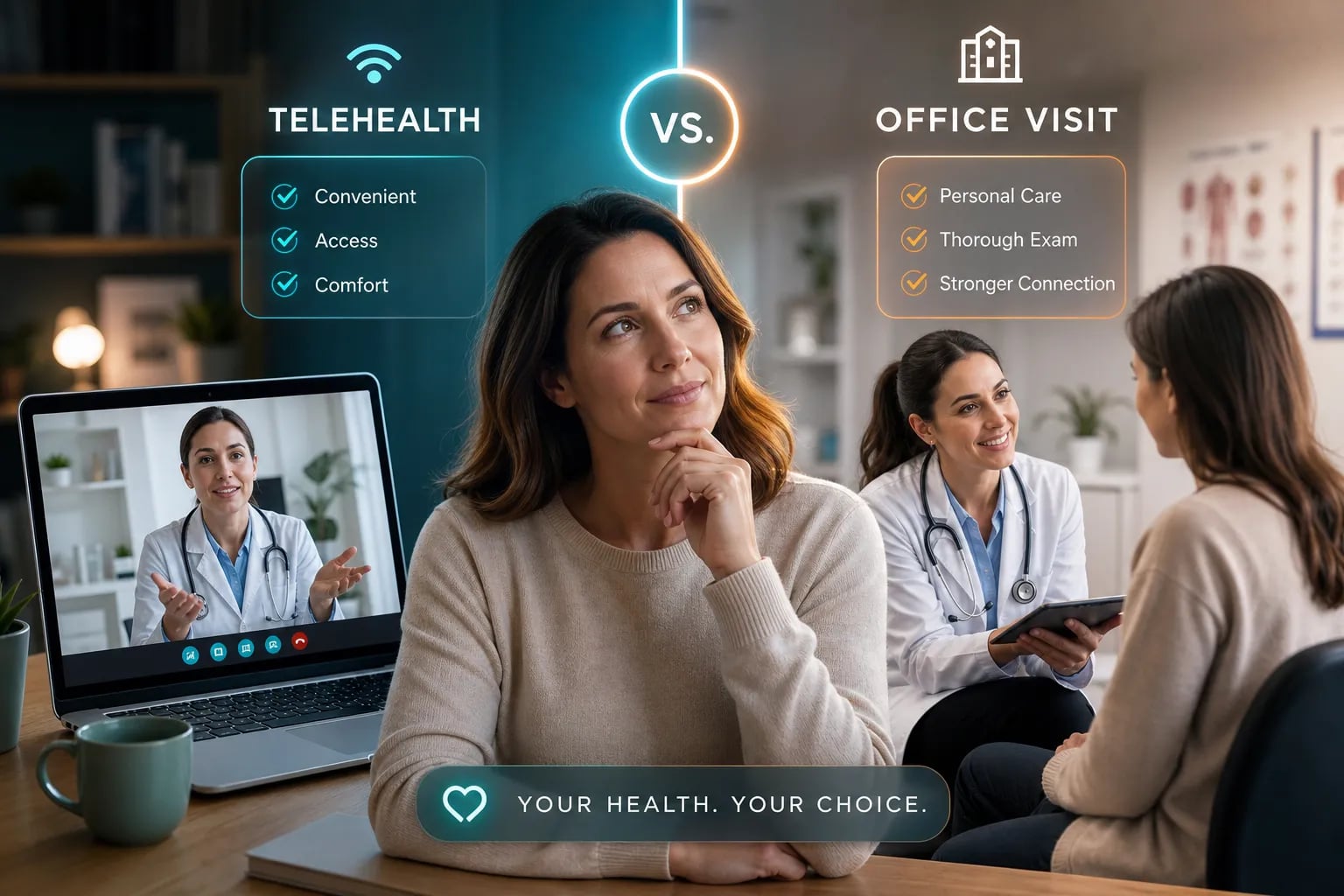
Telehealth vs. Office Visit: A Chronic Care Decision Guide
Picture this: your doctor’s office sends a routine follow-up reminder for your blood pressure. You know the drill. You’ll drive 25 minutes each way, sit in a waiting room longer than the actual appointment, and walk out 10 minutes later with the same prescription you already have. The whole thing takes half a day. You start wondering: do I actually need to go?
That question runs through the minds of millions of Americans managing hypertension, diabetes, heart failure, COPD, and kidney disease every single month. Knowing when a chronic illness patient should use telehealth instead of an office visit, and when that instinct would be a mistake, is one of the most practical decisions in modern chronic disease management. The honest answer isn’t “always go in” or “just do telehealth.” Some appointments genuinely require a clinician’s hands, and some genuinely don’t. Knowing the difference protects your health and saves you real time and energy.
By the end of this article, you’ll have a clear framework for deciding which of your follow-ups belong on a video screen and which ones need a physical exam room. You’ll also understand how services like RemoteHCS are built around exactly this challenge, providing the daily clinical oversight that makes your telehealth appointments more productive and your office visits more purposeful when they happen.
What the evidence actually says about telehealth for chronic illness
Most people arrive at this question with some skepticism. A video call sounds convenient, but is it actually clinically equivalent to sitting in front of your doctor? The research gives a more reassuring answer than you might expect, with some important caveats attached.
How virtual follow-ups compare to in-person visits on key outcomes
A PCORI study found no significant differences in avoidable emergency department visits or preventable hospitalizations between patient populations using high versus low rates of telehealth. Systematic reviews of telemedicine for chronic disease management consistently show that differences in clinical outcomes are small or not clinically meaningful for appropriate visit types. On HbA1c control specifically, telehealth showed greater improvement at five to six months compared to in-person visits, with similar outcomes at twelve months. That’s not a consolation prize; it’s a genuine finding across multiple study designs.
Blood pressure control follows a similar pattern. Telehealth interventions that incorporate home monitoring data have demonstrated improvements in blood pressure outcomes comparable to standard care. The CDC’s Community Preventive Services Task Force has documented that telehealth approaches, including interactive data submission and web-based tools, can improve medication adherence and dietary outcomes alongside blood pressure control.
What patient satisfaction data tells us
Patients frequently rate telehealth satisfaction as equivalent to or better than in-person visits for appropriate appointment types. The drivers are predictable: no travel, no waiting room, continuity with a clinician they already know, and the ability to attend from home. Satisfaction tends to dip when patients feel the visit was rushed or when they sense the clinician couldn’t fully assess them. That’s typically a signal the appointment type was wrong for telehealth, not that telehealth itself is the problem.
Where telehealth genuinely falls short
Up-to-date labs and paraclinical assessments happen less frequently in telehealth pathways, according to systematic review data. Physical examination-dependent decisions simply don’t translate to a screen. And rapidly worsening presentations have no business in a video queue. Telehealth is a powerful tool for the right situations, and recognizing where it stops being the right tool is part of using it well.
When should a chronic illness patient use telehealth instead of an office visit?
The research on virtual care for chronic illness is useful, but readers with a specific condition want condition-specific guidance. The suitability of telehealth varies meaningfully based on disease volatility, available home devices, and what a given appointment needs to accomplish.
Diabetes: the clearest case for telehealth follow-up
Diabetes has the strongest clinical evidence supporting virtual follow-up in place of routine in-person visits for stable patients. Monthly or periodic virtual check-ins, remote glucose data review, medication titration, and lifestyle coaching all translate effectively to a virtual setting. When a patient uses a connected glucometer or continuous glucose monitor, the clinician already has the data they need before the call even starts. The ADA’s current standards support using diabetes technology and ongoing glycemic assessment, with glycemic review at least twice yearly for patients meeting goals and every three months when targets aren’t being met or therapy is changing. That cadence works entirely within a telehealth model for the right patients.
Hypertension: managing blood pressure without the waiting room
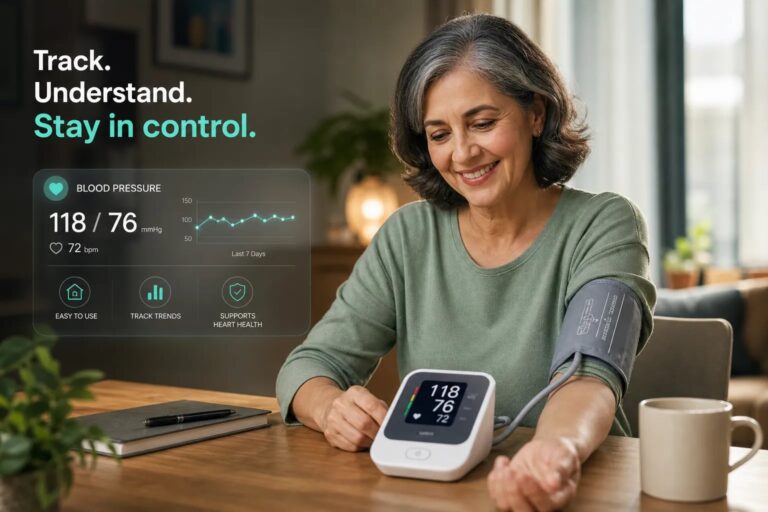
Evidence supports home blood pressure monitoring paired with telehealth follow-up for many stable hypertension patients, though guideline endorsement is not as explicit as it is for diabetes. When your readings have been consistently within range and your medication hasn’t changed, a virtual visit covers much of the same clinical ground as an office appointment. The key is getting those readings to your clinician before the call. Remote blood pressure data reviewed ahead of a virtual appointment gives your clinician a 30-day picture rather than a single office reading, and research on out-of-office blood pressure monitoring suggests this kind of longitudinal data is often more representative of your true blood pressure than an isolated clinic measurement.
Heart failure, COPD, and other monitored conditions
Heart failure and COPD benefit from telehealth follow-up when the patient is stable and using connected devices. Daily weight checks for heart failure patients, pulse oximetry readings for COPD, and consistent symptom reporting give a clinician enough signal to conduct a meaningful virtual review. The trade-off is that both conditions carry higher volatility risk than hypertension or well-controlled diabetes. A patient with heart failure who has been stable for months is a different clinical picture from one who was recently discharged after an exacerbation, and those two patients should not have the same visit type.
The visit types that work best over a screen
Two patients with the same diagnosis can need very different things from a given appointment. Understanding what a visit needs to accomplish is at least as important as knowing your diagnosis when deciding between virtual and in-person care.
Medication reviews, refills, and dose adjustments
When the goal is reviewing whether a medication is working, discussing side effects, or adjusting a dose based on home readings, telehealth handles this well. Your clinician needs your reported symptoms and your numbers, not a stethoscope. Prepare for this type of visit by keeping a short log of your readings and any side effects you’ve noticed since your last appointment. That log, reviewed in the first two minutes of the call, sets up a more productive conversation than any waiting-room intake form.
Lifestyle counseling and self-management check-ins
Goal-setting conversations, dietary guidance, activity planning, and medication adherence coaching are strong candidates for virtual visits. There’s no physical exam involved, and the quality of these conversations depends on communication and shared data, not proximity. HHS explicitly lists lifestyle counseling as one of the most appropriate telehealth visit types for chronic disease management. If you’ve been adjusting your diet or starting a walking routine, talking through how that’s going with your care team is exactly what a virtual visit is designed for.
Care coordination and specialist collaboration
When the goal is aligning your primary care provider with a cardiologist, nephrologist, or endocrinologist on your care plan, a video call accomplishes this efficiently. Coordination visits don’t require anyone to examine you; they require everyone to communicate clearly. This is one of telehealth’s most underused strengths, especially for patients managing more than one condition simultaneously. Getting two or three members of your care team on the same page about your current plan doesn’t need an exam room.
Red flags that always require in-person or emergency care
The following situations require immediate escalation beyond telehealth. When the virtual option feels like the easier path, these are the moments where that instinct is wrong.
Symptoms that need a clinician’s hands, not a camera
New or worsening chest pain, acute shortness of breath at rest, one-sided weakness or facial droop, slurred speech, sudden confusion, and vision changes do not belong in a telehealth queue. A clinician on a video call cannot auscultate your lungs, assess a neurological deficit, or order an immediate ECG. These presentations require physical examination and immediate diagnostics that simply cannot be replicated remotely. The availability of telehealth does not make it appropriate for symptoms like these.
The emergency tier: when to call 911 first
Some presentations bypass both telehealth and a scheduled office visit entirely. The following are 911 situations, call for emergency services first:
- Crushing chest pressure or chest pain that won’t resolve
- Inability to complete a sentence due to breathlessness
- Stroke signs using the FAST framework: Face drooping, Arm weakness, Speech difficulty, Time to call
- Uncontrolled bleeding or severe allergic reaction with throat swelling
- Loss of consciousness
- Sudden marked deterioration in a known heart failure or COPD patient
A telehealth platform is not an appropriate triage step when someone’s life is at immediate risk.
How to triage yourself before you decide
Use this mental filter before you log on to a video visit. Ask yourself: Is this a change from my normal baseline? Did it come on suddenly? Does it involve my heart, lungs, or brain? Is it getting worse rather than better? If the answers are yes, in-person or emergency evaluation is the right call. If the answers are no and your appointment is about reviewing numbers, adjusting a plan, or checking in on how your management is going, telehealth is likely appropriate for your situation.
The hybrid care model: why “either/or” is the wrong question
Most chronic illness patients don’t need to choose between telehealth and office visits as a permanent policy. They need a thoughtful rhythm that uses both, matched to the actual clinical demands of their condition at any given point in time.
How to decide when to choose telehealth for chronic disease follow-ups
Consider condition volatility the primary driver, not convenience or preference. A patient recently discharged after a heart failure exacerbation needs more frequent in-person checkups initially, then can transition to more virtual follow-up as they stabilize. For stable patients, care teams may lean toward more virtual visits than in-person appointments, with the specific mix depending on program design, patient needs, and clinician judgment. Condition volatility, not convenience, should drive that mix. A care team that understands this will help you build a schedule that protects your health rather than just accommodating your calendar.
What to save for the office and what to keep virtual
Office visits should anchor your care plan: annual physicals, lab reviews that require an exam, new symptom evaluation, and any visit where your clinician says they want to take a look at something. Virtual visits handle everything in between, medication checks, home data reviews, lifestyle coaching, and care coordination. This distinction isn’t primarily about cost or convenience; it’s about matching the visit format to what the visit actually needs to accomplish.
Discussing a mixed-visit schedule with your care team
If you haven’t already asked your clinician about structuring a hybrid schedule, consider raising it directly: “Given my current conditions and how stable I’ve been, which of my upcoming follow-ups could we do virtually, and which ones do you need me in for?” That conversation alone moves your care relationship forward in a way that waiting for your next scheduled appointment doesn’t. It positions you as an active participant in your own care plan rather than a passive recipient of whatever the system schedules next.
Home devices that make your telehealth appointments more productive
A telehealth visit without home data is a weaker clinical visit. A visit backed by 30 days of blood pressure readings or a clear glucose trend is a fundamentally different conversation. The devices you use at home between appointments are what make remote care meaningful rather than just convenient.
The four core devices for chronic condition monitoring
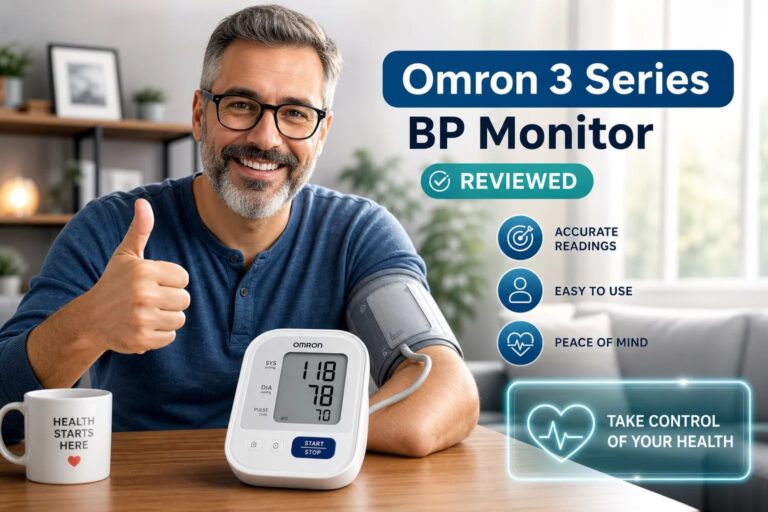
Blood pressure cuffs are the foundational device for hypertension and cardiovascular follow-up, capturing home readings that reflect your actual daily blood pressure rather than the single elevated reading that office anxiety often produces. Pulse oximeters track oxygen saturation and are essential for COPD and heart failure patients, providing an early warning signal that something is changing before symptoms become severe.
Glucometers and continuous glucose monitors give diabetes patients and their clinicians a real-time window into how food, activity, stress, and medication are interacting day to day. Weight scales are often underestimated, but for heart failure patients, small weight gains over a short period, a few pounds in a day or two, can be an early signal of fluid retention; catching that early can help you avoid an emergency room visit.
Minimum tech setup for a functional telehealth visit
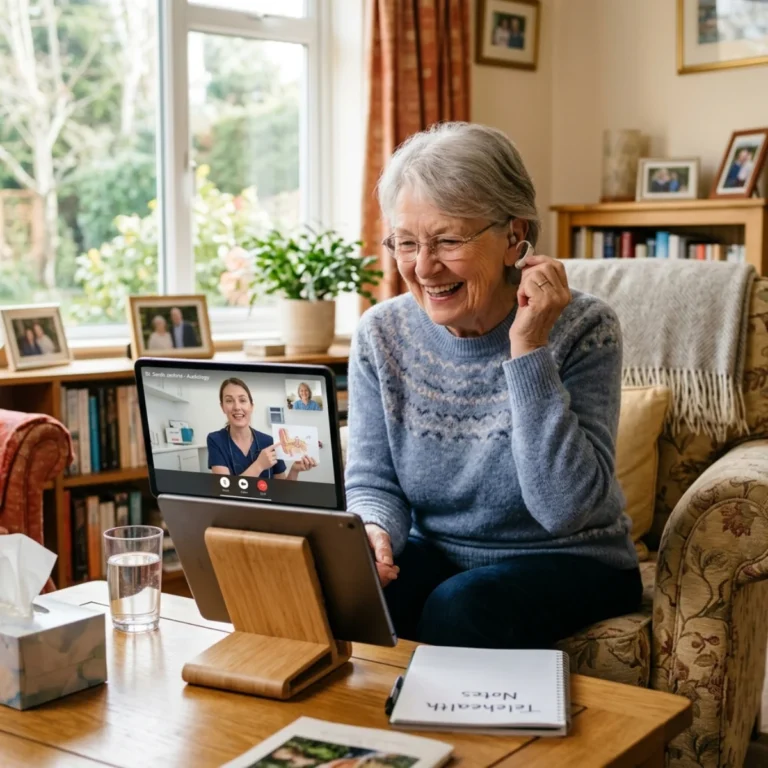
You don’t need a sophisticated home office setup to have a productive virtual appointment. A smartphone, tablet, or computer with a working camera and microphone, plus a stable internet or cellular connection, covers the technical requirements. For patients with limited home internet access, some remote monitoring programs use cellular-connected devices that transmit data automatically without requiring a Wi-Fi connection, and some programs support telephone-based check-ins when video isn’t feasible. Many patients find telehealth more accessible than they expected before trying it.
Getting your readings in front of your clinician before the visit starts
The most productive telehealth visits happen when your clinician has already reviewed your home readings before the call begins. That means sharing your data in advance through your patient portal, an app connected to your monitoring device, a secure message sent the day before, or a printed log you read on camera if nothing else is available. This one habit changes the quality of every virtual appointment. Instead of spending the first five minutes recapping what’s happened since your last visit, you spend those minutes discussing what it means and what to do next.
How remote patient monitoring extends care between telehealth visits
Scheduled visits, whether virtual or in-person, leave gaps. For someone managing a chronic condition, a lot can change between a visit in January and a follow-up in March. Remote patient monitoring fills those gaps with continuous clinical oversight rather than periodic check-ins.
What remote patient monitoring adds to a telehealth-first care plan
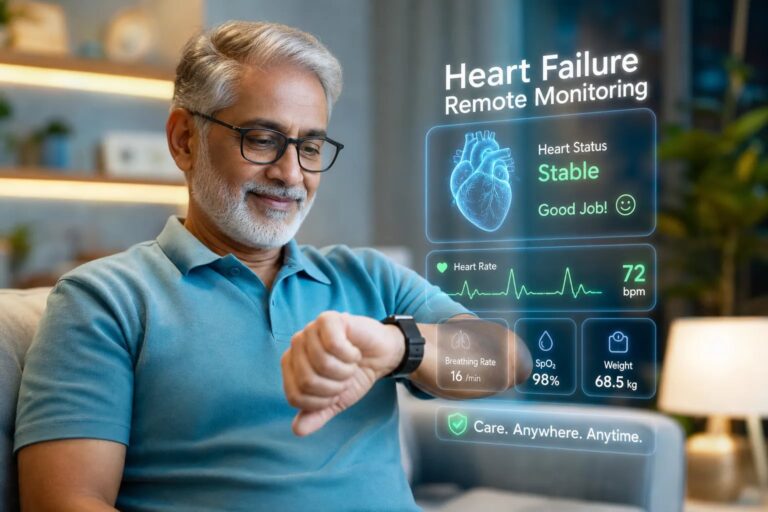
Remote patient monitoring means your connected devices transmit health data to a clinical team on a daily basis, not just when you log into a video call. That team reviews trends, flags abnormal readings, and reaches out when something changes before it becomes an emergency. For chronic conditions like heart failure, COPD, and diabetes, this daily signal is where early deterioration can get caught. One observational program using historical controls reported a 30-day readmission rate of 7.8% among adherent RPM patients, compared to a historical control rate of around 15%. It’s worth noting that randomized trial evidence on RPM and heart failure readmissions is mixed, and outcomes depend heavily on program design and patient adherence. The consistent thread in programs that do show benefit is continuous clinical oversight between visits, not just better appointments.
How RemoteHCS keeps your clinician informed every day
RemoteHCS is purpose-built for exactly this: daily monitoring of your vitals through connected devices, with licensed clinicians reviewing your data and secure messaging available between visits. RemoteHCS is not an on-demand urgent care platform; it is a continuous care infrastructure designed specifically for people managing diabetes, hypertension, heart failure, COPD, and kidney disease at home. When your next telehealth follow-up or office appointment happens, your clinician already knows what’s been happening since the last one. That changes the entire clinical conversation.
Medicare coverage for RPM and what it means for you
CMS has covered remote patient monitoring since 2018, and that coverage remains in place through 2026 and beyond. CPT code 99453 covers the one-time setup and patient education when you enroll in an RPM program. Code 99454 covers the monthly device supply and data transmission when you generate at least 16 days of readings in a 30-day period. Codes 99457 and 99458 cover the clinical management time your care team spends reviewing your data and communicating with you each month. For Medicare-eligible patients, this coverage may help reduce out-of-pocket burden while adding a layer of daily oversight that scheduled visits alone can’t provide. Ask your care team or contact RemoteHCS directly to find out whether you’re eligible.
How to prepare for a telehealth appointment that actually moves your care forward
Deciding that a virtual visit is right is step one. Making it count is step two. The patients who get the most from telehealth appointments treat them with the same intentionality they’d bring to an office visit, which means showing up prepared.
What to gather before you log on
Before your virtual appointment, pull together a log of recent home readings (blood pressure, glucose, weight, oxygen saturation as applicable to your conditions), a list of your current medications with any questions or side effects noted, a summary of any symptoms you’ve experienced since your last visit, and a list of questions ranked by priority. The priority ranking matters more than it might seem. Visits end on a clock, and if your most important concern is the third thing you bring up, it may not get the attention it deserves. Lead with what matters most.
How to communicate symptoms clearly on a video call
Clinicians on video calls rely more heavily on what you tell them than on what they can observe directly, which means descriptive language carries extra weight. When describing a symptom, cover when it started, how often it happens, what makes it better or worse, and how it compares to your usual baseline. “My ankles have been more swollen than usual in the evenings for the past five days, and it’s happening even on days when I’ve been careful about sodium” is more useful to your clinician than “my ankles are a little puffy.” Specificity is what allows a virtual visit to approach the clinical value of an in-person one.
What good follow-up looks like after a virtual visit
A productive telehealth appointment ends with a clear next step: a medication adjustment, a lab order, a follow-up scheduled, or documented confirmation that your current plan is on track. You should expect a visit summary in your patient portal, a clear understanding of what would prompt your clinician to want to see you in person before your next scheduled visit, and a sense of what’s being monitored and why. If a telehealth visit ends without those things, it’s worth calling the office to clarify. A good virtual visit is a clinical event, not a phone check-in.
Having the telehealth-vs-in-person conversation with your clinician
The decision framework in this article is only useful if you’re willing to act on it by having a direct conversation with your care team. Most patients don’t initiate this conversation. The ones who do tend to build more functional long-term care relationships.
Asking the right questions about your care plan
You can raise this directly with your clinician: “For my current conditions and how stable things have been, which of my upcoming appointments could we do virtually?” and “What would need to change for you to want to see me in person?” These aren’t demanding questions; they’re collaborative ones. Most clinicians are fully prepared to answer them and often appreciate that a patient is thinking about care structure rather than just showing up when the reminder arrives. That conversation is the starting point for a genuinely hybrid care model.
When your clinician’s recommendation should override your preference
If your clinician asks you to come in, that recommendation carries clinical weight you should take seriously. A provider requesting an in-person visit usually has a specific reason: a finding that warrants examination, a concern from your recent device data, or a clinical judgment that your condition needs direct assessment. Convenience is a legitimate factor in designing your care schedule. It is not a factor that should override clinical judgment. The hybrid model works because both sides of it are used when they’re appropriate, not because telehealth is maximized at every opportunity.
Building a long-term care model you can trust
The goal of all of this isn’t to minimize office visits or to maximize virtual appointments. It’s to have the right type of clinical contact at the right time, supported by continuous monitoring in between. That model, combined with connected home devices and an engaged care team that reviews your data regularly, is what keeps chronic conditions stable over the long term. It’s also what reduces the health crises that lead to hospitalizations, emergency room visits, and the hardest days of living with a chronic condition.
The decision comes down to one clear framework
Deciding when a chronic illness patient should use telehealth instead of an office visit doesn’t require guesswork. It requires honest answers to a few clinical questions. Is this visit about reviewing data, adjusting a plan, or maintaining continuity? Telehealth handles that well. Has something changed, worsened, or appeared that requires a clinician’s hands to assess? That belongs in an exam room. Is something happening that involves your heart, lungs, or brain in a sudden or worsening way? That’s an emergency call, not a telehealth queue.
The hybrid model is the practical standard for people managing chronic conditions long-term, not a temporary compromise. Office visits anchor your care. Virtual visits maintain it between those anchors. And daily remote monitoring through a service like RemoteHCS fills those gaps with real clinical oversight rather than hoping nothing changes between appointments.
Start by having this conversation with your care team. Ask which of your follow-ups could reasonably move to telehealth and which ones they need you in for. Then ask whether remote patient monitoring makes sense for your condition. If you’re managing a chronic illness and want to explore whether RPM enrollment through RemoteHCS fits your care plan, join the waitlist at RemoteHCS and find out what daily clinical oversight actually looks like between visits.